


Windows blue screen: capture the stop code, fix it, or call a pro
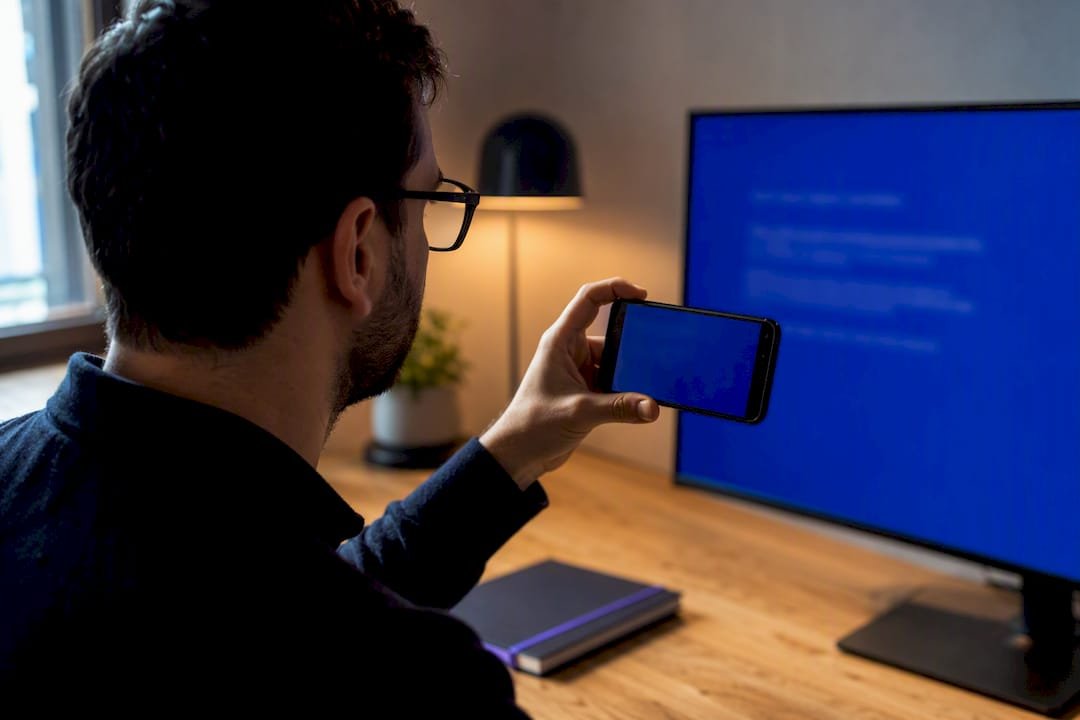
The screen went blue. Everything stopped. That is Windows protecting the machine, not teasing you. Photograph the stop code before you touch a thing. One crash is often a fluke. The same code twice is the real story.
- Ask what the stop code says. Names like MEMORY_MANAGEMENT or INACCESSIBLE_BOOT_DEVICE beat a hex string when you search or call.
- Ask what you plugged in last. A new dock, USB drive, or graphics driver is the usual trigger.
- Ask whether it happens once or keeps repeating. A matching code on the second crash is the cue to stop guessing.
- Ask whether you can still boot. If Windows never reaches the desktop, that is a boot job, not another settings tweak.
If you would rather not chase drivers yourself, Computer Repair Scientist can read the dump. Sydney can start with computer repair across Sydney. Central Coast homes can use computer repair on the Central Coast.
Won't reach the desktop at all? Use Windows won't boot. Freezes without a blue screen? Try PC keeps freezing.
Key takeaways
Photograph the stop code first. Most blue screens come from a driver. Start with cheap, reversible checks. The same code twice is when you stop guessing and call someone.
| Point | Details |
|---|---|
| Photo first | Write down or photograph the stop code and any .sys name. That photo is the evidence a technician actually needs. |
| Drivers first | Most stop errors trace back to a third-party driver. Roll back the last graphics, network, or dock change before you blame RAM. |
| Cheap tests first | Unplug new hardware, try Safe Mode, then Device Manager. Opening the case comes later. |
| Same code twice | One crash can be a fluke. The same stop code again, missing files, or drive noise is the cue to escalate. |
| Bring the dump | Minidumps live in C:\Windows\Minidump. Have the photo, recent changes, and that folder ready if you call. |
Table of contents
- Fixing a blue screen in Windows: 8 steps to try right now
- What does the stop code on a blue screen actually mean?
- What causes blue screens, and how do you test for each one?
- How do you troubleshoot a Windows blue screen step by step?
- How do technicians analyse crash dumps for a blue screen?
- How do you prevent future blue screen errors?
- When we get called in for a blue screen, and what to have ready
- When the blue screens will not stop
- Sources
- FAQ
Fixing a blue screen in Windows: 8 steps to try right now
Do these in order before you hunt drivers. Microsoft's own stop code guidance says most one-off restarts settle on their own.
- Capture the stop code. Photograph the screen. Write down the name, something like INACCESSIBLE_BOOT_DEVICE, and any module listed under it.
- Unplug anything new. Pull the USB drive, dock, external disk, or gadget you added this week. Then restart normally.
- Watch the restart. If it boots and stays up, keep using it. If it crashes again, move to Safe Mode.
- Boot into Safe Mode. Hold Shift and click Restart, or interrupt boot twice so recovery opens. Choose Safe Mode from there.
- Check free disk space. Keep 10 to 15 percent of the main drive free. A packed disk causes update failures that look like hardware faults.
- Run Windows Update. Microsoft patches known stop-code bugs. An old driver package is one of the usual triggers.
- Run an SFC scan and a quick antivirus check. Open Command Prompt as administrator and type
sfc /scannow. Let your antivirus run a fast scan in the background. - Know when to stop. The same code after two or three tries, missing files, odd drive noises, or a PC that will not boot at all: that is the cue to escalate.
Pro Tip: Keep your phone next to the desk for a week after the first crash. If it happens again, you want that photo to compare. A matching code is the clearest sign you are still on the same fault.
Microsoft Learn's stop code reference uses the same order: remove new hardware, Safe Mode, Device Manager, disk space, then updates. That is the five minute check technicians start with.
What does the stop code on a blue screen actually mean?
The stop code is the name Windows gives the failure it hit. It is the most useful line on that screen. Codes like MEMORY_MANAGEMENT or PAGE_FAULT_IN_NONPAGED_AREA name the category, not the exact part.
Under the code you may see a hex value and a module name. That module was running when the crash happened. It is not automatically guilty. A driver listed there might just have been in the way when something else failed. Treat it as a lead, not a verdict.
- Windows 10 and Windows 11 use the same stop code system. The Windows 11 screen and QR link look a bit different. The names do not.
- The name, such as
DRIVER_IRQL_NOT_LESS_OR_EQUAL, is better to search and report than the hex value alone. - A module ending in
.sysalmost always points to a driver file. That narrows the hunt. - No module name at all usually means Windows could not pin the fault to one file.
Most stop errors we see start with a third-party driver, not Windows itself. Check drivers before you start suspecting RAM or the motherboard.
Photograph the full screen, QR code included. After a successful boot, Event Viewer System log around the crash time is the backup. Windows also writes a memory dump in most default setups. That dump matters later.
What causes blue screens, and how do you test for each one?
Most blue screens sit in one of five buckets. Each has a cheap test before you assume the worst.
- Third-party drivers. Open Device Manager. Look for a yellow warning. If you updated graphics, network, or a dock driver in the last two weeks, roll that change back first.
- Faulty RAM. Search Windows Memory Diagnostic in the Start menu and run a standard scan. Different stop codes each time often point here.
- Storage faults.
INACCESSIBLE_BOOT_DEVICEusually means Windows lost the boot drive. Check SMART with the drive maker's tool. If you recently opened the case, reseat the SATA or NVMe connection. - Heat and power. Codes that start with
WHEA_UNCORRECTABLE_ERRORoften mean heat or unstable power. Check fans, clear dusty vents, and reset any overclock in BIOS or UEFI back to default. - Software and system files. A recent Windows update, a new app, or a damaged system file can look like hardware.
sfc /scannowandDISM /Online /Cleanup-Image /RestoreHealthcatch a lot of those.
Test cheap and reversible first. Disabling a driver is easier than swapping RAM. Opening the case comes after the software checks fail.
How do you troubleshoot a Windows blue screen step by step?
Once the quick list is done, work this flow. Safest first. Recovery last. It is the same order we use when a PC lands on the bench.
1. Boot into Safe Mode and watch. Safe Mode loads only essential drivers. Fine there, crash in a normal boot: a third-party driver or startup app is almost certainly involved. Still crashing in Safe Mode: hardware or a core system file is more likely.
2. Work through Device Manager. For a warning icon, try Update Driver first. Then Roll Back Driver if it is offered. If you need a clean test, disable the device for a day. That tells you whether that hardware is in the crash before you replace anything.
3. Check storage health and BIOS defaults. Run chkdsk /f /r from an elevated Command Prompt. It needs a restart. Check SMART with the maker's tool. If you changed RAM timings, voltage, or an overclock, reset BIOS or UEFI to default and retest. If the drive already looks sick, image it before you run more repair tools.
4. Run SFC and DISM together. sfc /scannow repairs core files. DISM repairs the Windows image SFC draws from. If SFC says it cannot fix something, run DISM first, then SFC again.
5. Use System Restore or Reset This PC when you know when it started. A restore point from before the crashes is faster than a reinstall. If restore points are gone, Reset This PC with keep my files replaces Windows and leaves your documents.
6. Handle a PC that will not boot. After two failed boots, Windows should open the recovery environment. Startup Repair covers common boot faults. Command Prompt there lets you run chkdsk or bootrec. Build a recovery USB while the machine is healthy, not after it refuses to start. The longer walk-through is in Windows won't boot.
| Situation | First action | Tool or command |
|---|---|---|
| Crashes only outside Safe Mode | Suspect a driver or startup app | Device Manager, msconfig |
| Crashes even in Safe Mode | Suspect hardware or system files | Memory Diagnostic, sfc /scannow |
Boot device errors (INACCESSIBLE_BOOT_DEVICE) |
Check drive health and cabling | Manufacturer SMART tool |
| Fault started after a specific change | Roll back to before the change | System Restore |
| Windows will not reach the desktop | Use the recovery environment | Startup Repair, recovery USB |
If you have been through this sequence and the crashes stay, you are looking at hardware or a dump that needs a technician. Newcastle and the Hunter can start with computer repair in Newcastle.
How do technicians analyse crash dumps for a blue screen?
When the usual flow does not land, the next evidence is the dump Windows wrote at the crash. You do not need to run the tools yourself. It helps to know what we are asking for.
- Minidumps save to
C:\Windows\Minidumpby default. They are a short snapshot, usually a few hundred kilobytes. - Full memory dumps capture everything in RAM. They are not the default. You turn them on in System Properties while the PC still boots.
- WinDbg, Microsoft's free debugger, opens the dump.
!analyze -vnames a likely module and the call stack. - That name is a lead, same as the module on the blue screen. It is not a confirmed verdict.
- Generic files like
ntoskrnl.exeshow up in almost every stack. Do not treat that as the cause. - A technician may disable a suspected driver to test the theory. If this is a work PC, stop at gathering the dump and let someone else do that step.
Pro Tip: If you can still boot normally and you plan to hand the PC over, turn on full memory dumps first. A minidump helps. A full dump often shortens the diagnostic.
How do you prevent future blue screen errors?
A short routine catches most of the conditions that lead here.
- Keep Windows Update and drivers current. Use the maker's site or Windows Update, not random driver packs.
- Back up the files that matter. An image backup means a full recovery is not a from-scratch week.
- Watch internal temperatures if the PC lives in a cabinet or gets dusty. Heat-related
WHEAerrors build slowly. - Create a System Restore point before a new graphics driver or a BIOS update.
- Build a recovery USB while the PC is healthy.
- When you set up a new machine or add hardware, change one thing at a time. The new PC setup checklist covers that in order.
When we get called in for a blue screen, and what to have ready
The recurring jobs we see sit in three buckets: a driver that broke after Windows Update, a drive that failed quietly for weeks then threw INACCESSIBLE_BOOT_DEVICE, or a BIOS setting that changed during an upgrade and never went back to default. Each is diagnosable. Each is faster with the right notes.
Before a remote session or a visit, write down the stop code, a rough timeline of recent changes, and whether crashes are random or only happen while gaming or waking from sleep. Remote work covers drivers, event logs, and system file repairs. Onsite adds hardware tests when the fault looks like a part. If you think files are already gone, copy what you can still open before anyone starts.
When the blue screens will not stop
Guessing through another driver rollback on a work machine costs more time than it saves. Onsite and remote diagnostics across NSW start with the same evidence this page asked you to keep: the stop code, recent changes, and a dump if one exists.

Computer Repair Scientist handles the hardware and driver side for laptops and desktops. Bring the photo. Call 0493 563 381 if you want a person to look at the code and the dump, then take the next small step. Wollongong can use computer repair in Wollongong and the Illawarra, or pick your area in the list below.
A machine that only feels slow, with no blue screen, is a different job. Start with computer running slow.
Sources
Microsoft's own pages are the cleanest next read:
- Stop code error or bug check troubleshooting - Microsoft Learn
- Troubleshooting Windows unexpected restarts and stop code errors - Microsoft Support
Frequently Asked Questions
Straight answers about Windows blue screens - without jargon or pressure. Call 0493 563 381 for advice, or get help below.
Want the quickest answer? 0493 563 381 for free advice.
Photograph the stop code first. Unplug anything you added recently, restart, and see if it comes back. If it does, boot into Safe Mode, check Device Manager, run Windows Update, then try sfc /scannow. Stop if the same code returns twice.
Most often it is a third-party driver that does not match Windows. After that come storage faults, RAM problems, heat, and damaged system files. The stop code tells you which bucket to test first.
Let it fail twice. Windows should open the recovery environment. Use Startup Repair from there. If the PC will not reach the desktop at all, that is the windows-won't-boot path, not another driver tweak.
Yes. One crash after a restart is common and often stays gone. The same stop code again and again is almost always a driver, a failing drive, or a hardware fault once you have the photo and, if needed, a crash dump.
Computer repair across NSW
Still getting the same blue screen?
If the same stop code keeps coming back, that is okay. Get computer repair in your area and we will take it from here.
Start here
Get computer repair
Optional Need a Sydney city or region?
Choose a side of Sydney
These are Sydney cities and regions, such as the Northern Beaches or Inner West. First tap a side of Sydney. Then open the city or region that covers you.
C Sydney City / Inner 3 areas
N Northern Sydney 6 areas
NW North-West / Central Sydney 3 areas
W Western Sydney 1 area
SW South-West Sydney 3 areas
S Southern Sydney 2 areas
Optional Find your suburb
Type a suburb from our listed coverage. This opens the matching city or region page for this topic. Listed suburb pages are general technology services, not this specialist page.
If your suburb is not listed, use the city or region list above, or call 0493 563 381.
Disclaimer
The information in this article is provided for general educational and informational purposes only. While PC Scientist strives to keep all content accurate and up to date, technology issues can vary depending on your device, software, network configuration, and individual circumstances. Always back up important data before attempting repairs or system changes. If you are unsure or the issue cannot be resolved safely, contact PC Scientist today for professional onsite or remote IT support. PC Scientist is not liable for any loss of data, damage, or other issues resulting from the use of the information provided in this article.